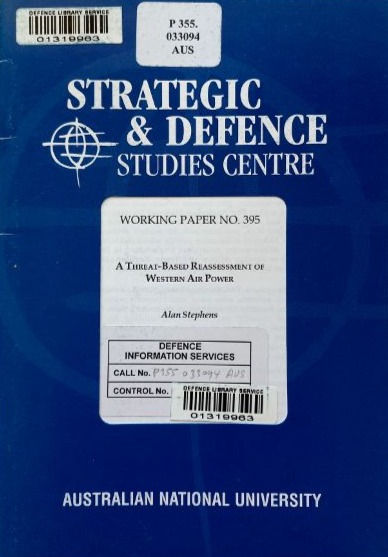

#395 A Threat-Based Reassessment Of Western Air Power (2005) By Alan Stephens
Working Paper No. 395
The way in which the West employs its air power in the post-September 11 world demands reassessment (as indeed does every other national security capability). Two factors are especially important. First, the strike against the World Trade Centre and subsequent attacks on Western interests around the world may imply a change in the nature of conflict, away from state-versus-state, theatre level campaigns towards a more ambiguous model represented by non-state actors, undefined battlefields, and disregard for the law of armed conflict — so-called ‘asymmetric’ warfare. The question here is: within that model, how relevant are traditional doctrines? Second, the suite of capabilities needed to mount and sustain a modern theatre level air campaign is so complex and extensive that it is questionable whether it is a realistic aspiration for any nation other than the United States. That is not to say that individual states should no longer contemplate the possibility of having to conduct theatre-level campaigns should their security circumstances indicate a need to do so; it is to say, however, that in the process they must be keenly aware of their limitations. More than ever, planners must satisfy the imperative to match force structures to threats and interests, both national and collective.
Throughout the history of the systematic application of air power, two roles have remained pre-eminent: defensive counter-air; and precision strike. The effects we require those vital roles to generate will remain constant, but the ways in which they are pursued are likely to change conceptually, technologically and organisationally. As long as those changes are managed capably (a task which may challenge some traditional air force preferences), focused defensive counter air operations, and strikes which are precise both in the understanding of their intended effect and in their execution, should continue to provide the West in general and its smaller member states in particular with a powerful military asymmetric advantage. The successful application of those capabilities will be central to the West’s campaign to contain the threat of jihadist revolutionaries and rogue states, and to promote the interests of good global governance, at both the collective and national security levels
- Soft Cover
- 28 pages
- In Good Condition






+By+Alan+Stephens)